Description
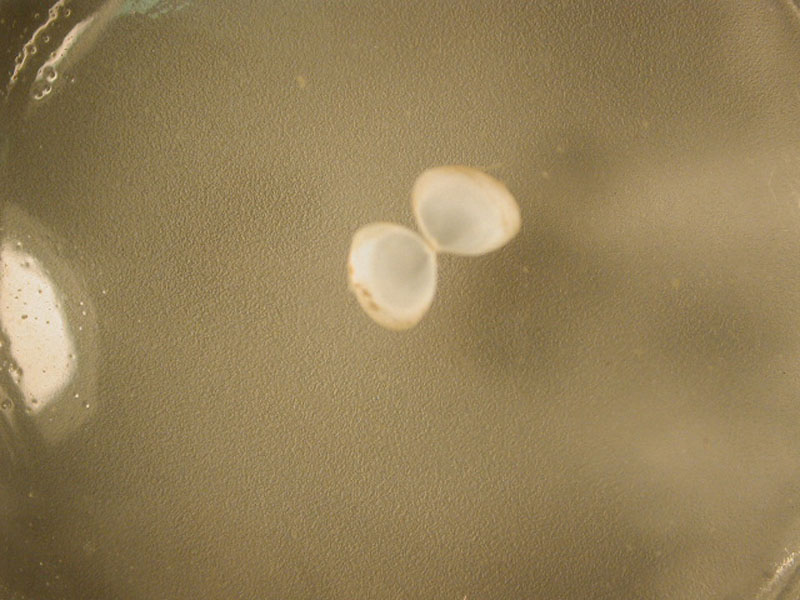
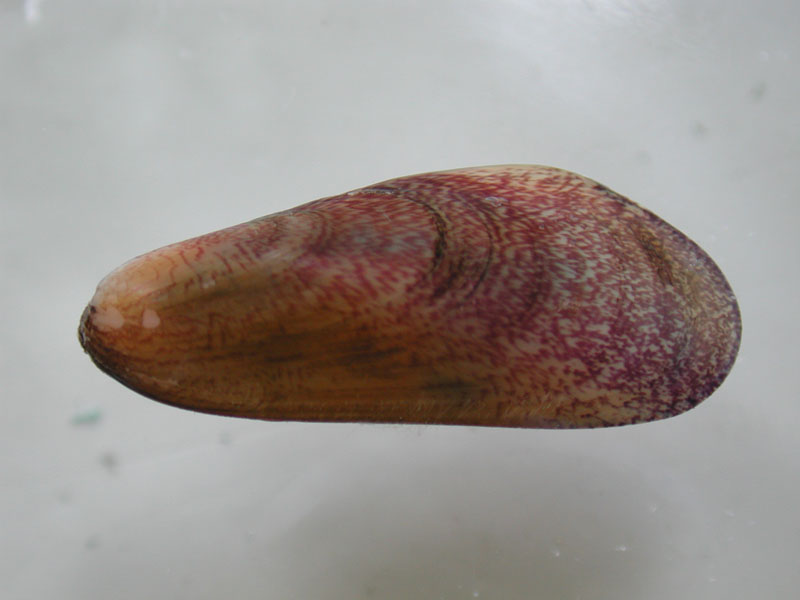
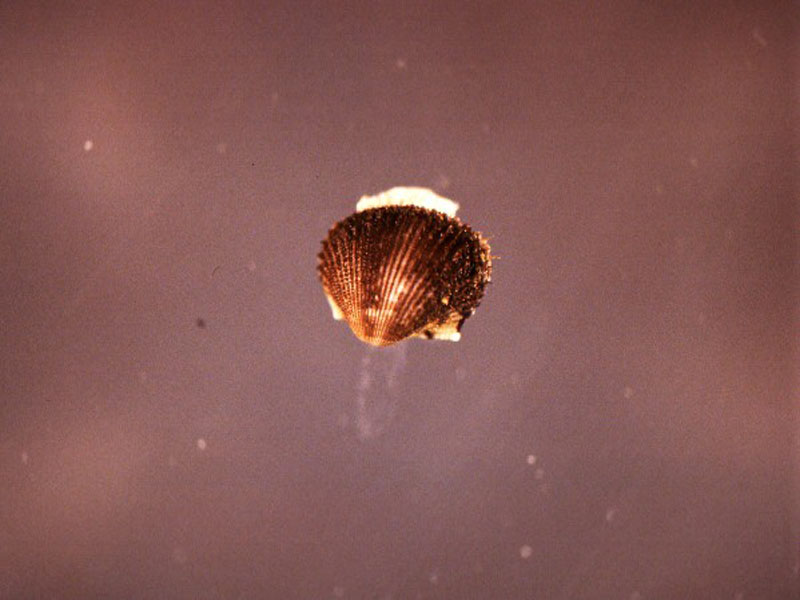
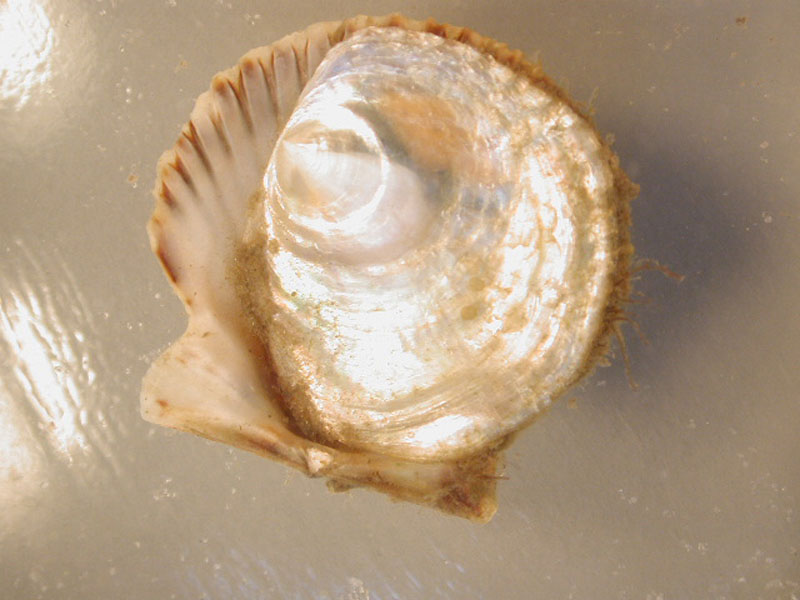
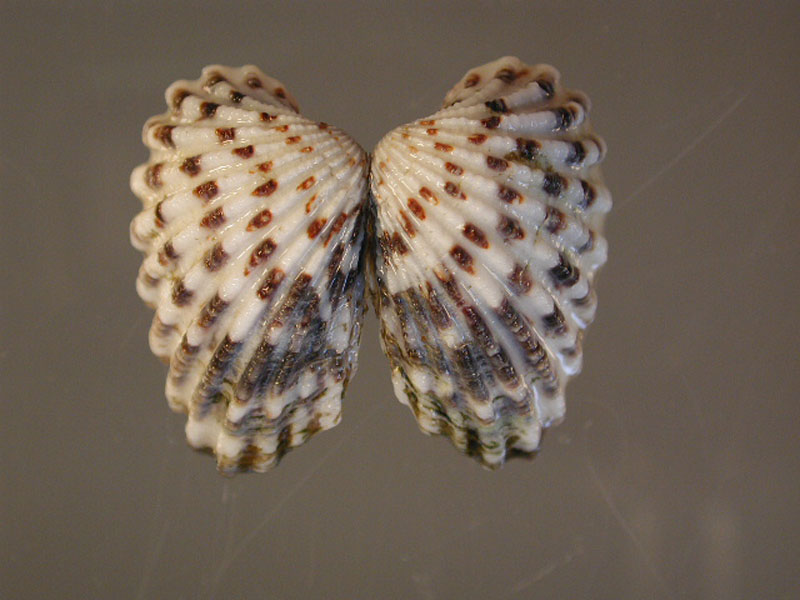
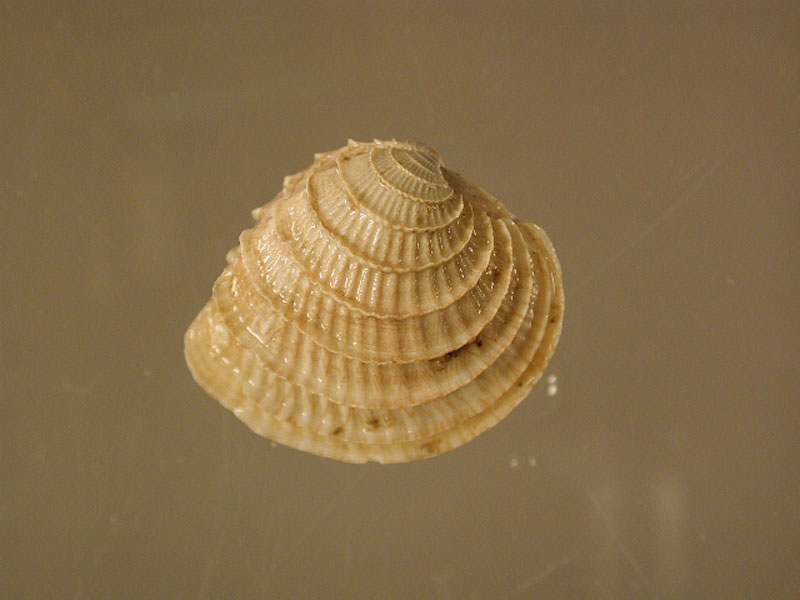
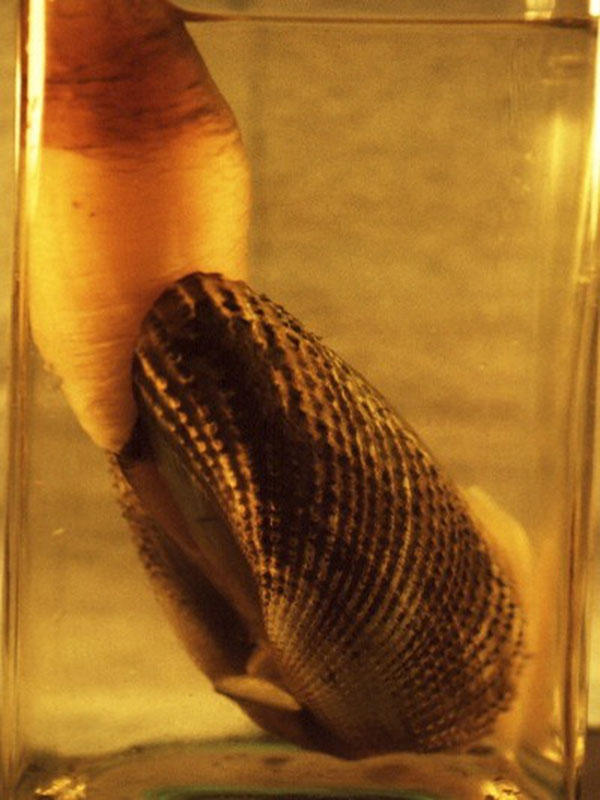
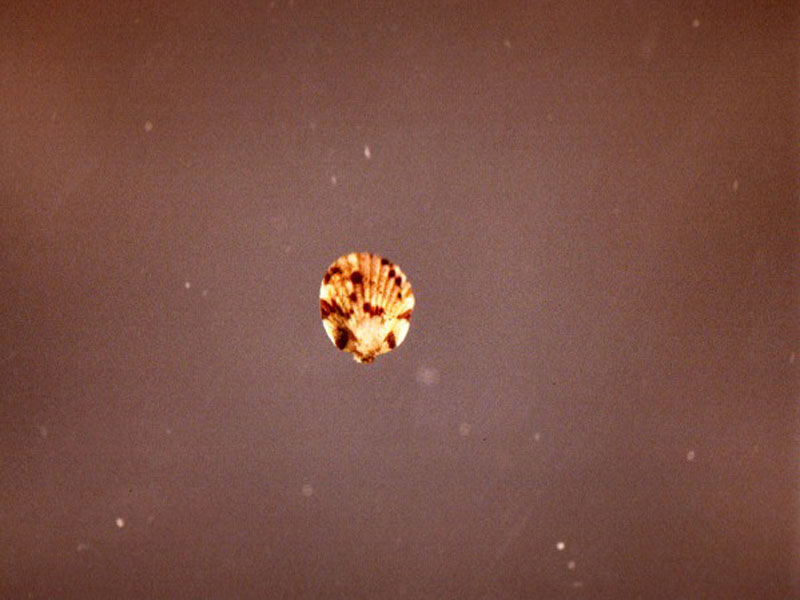
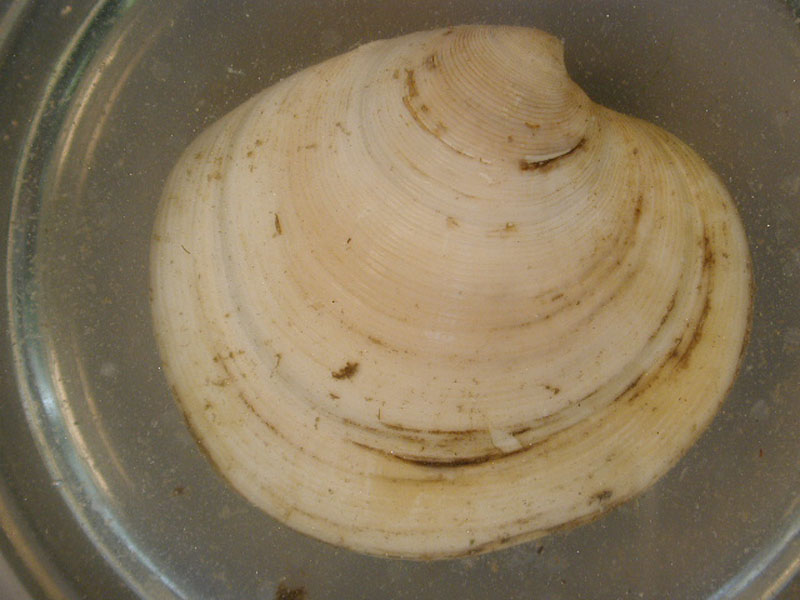
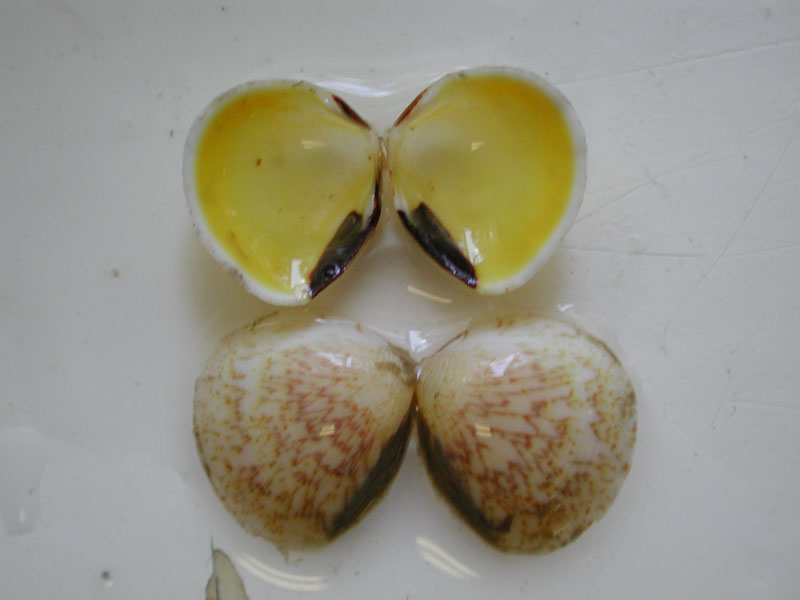
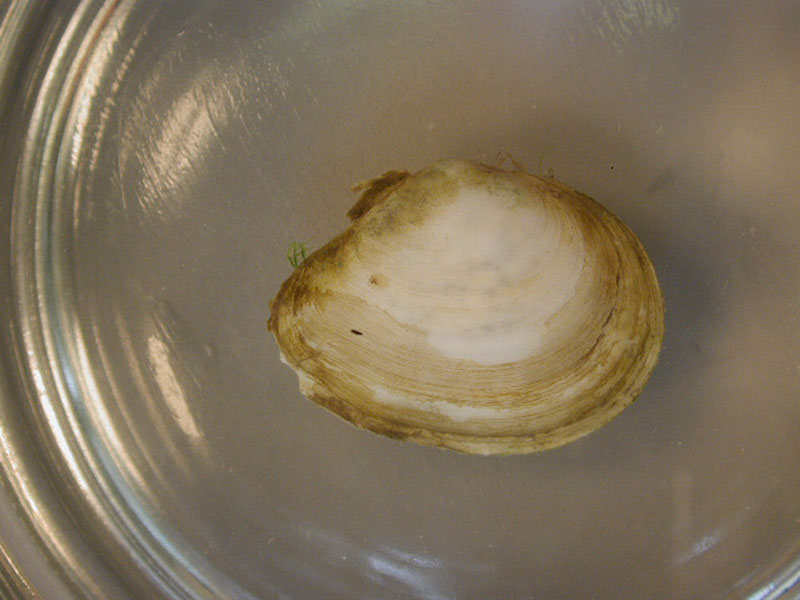
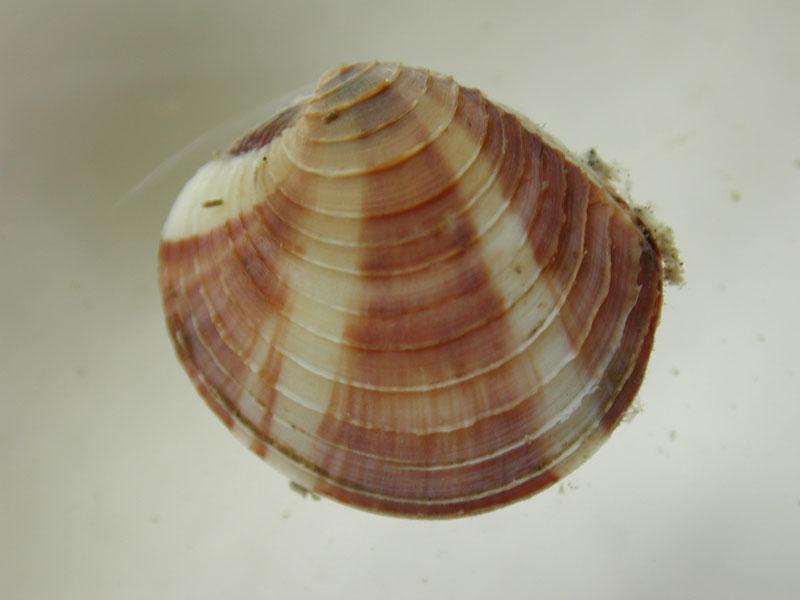
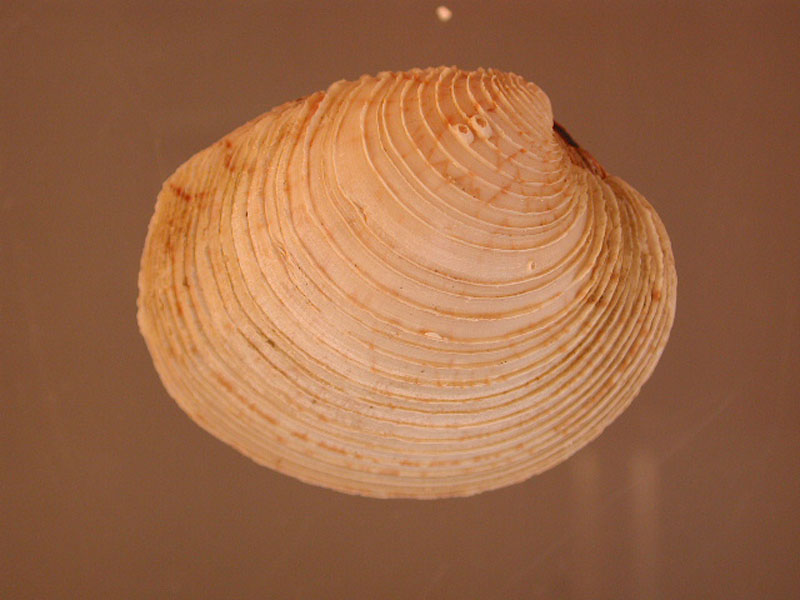
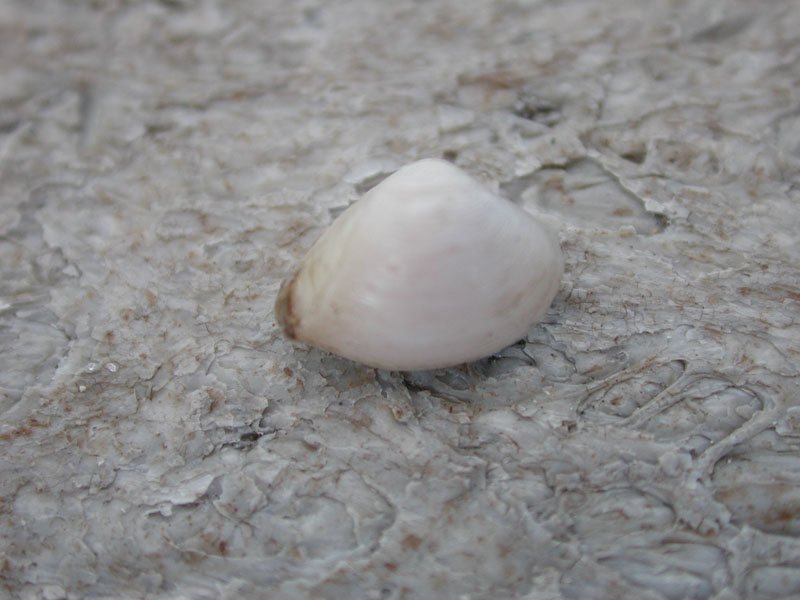
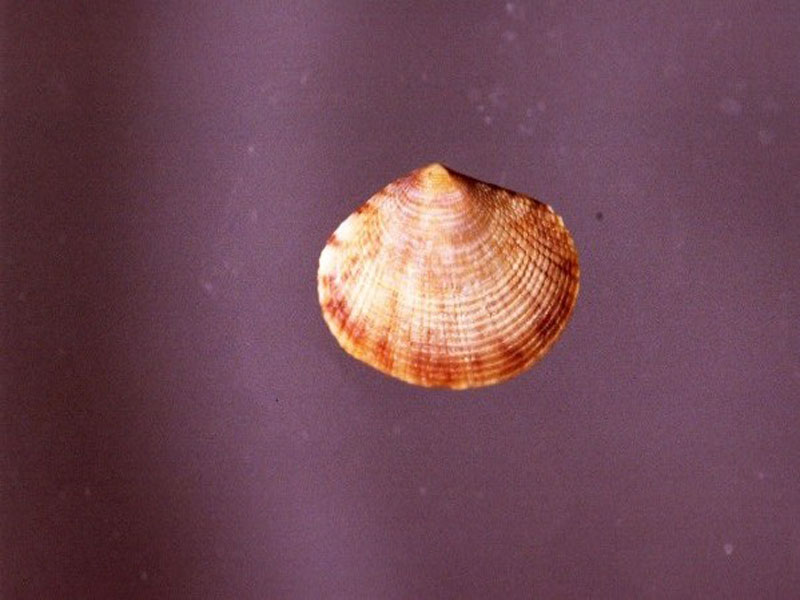
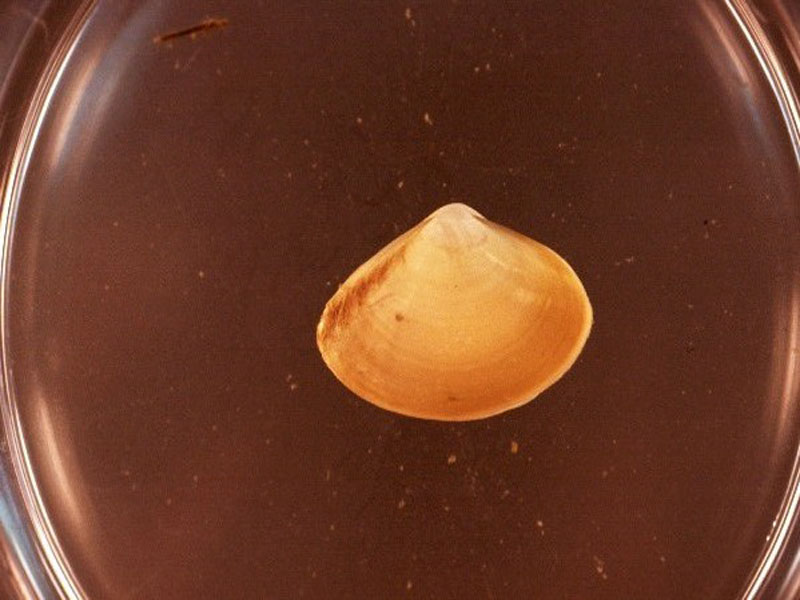
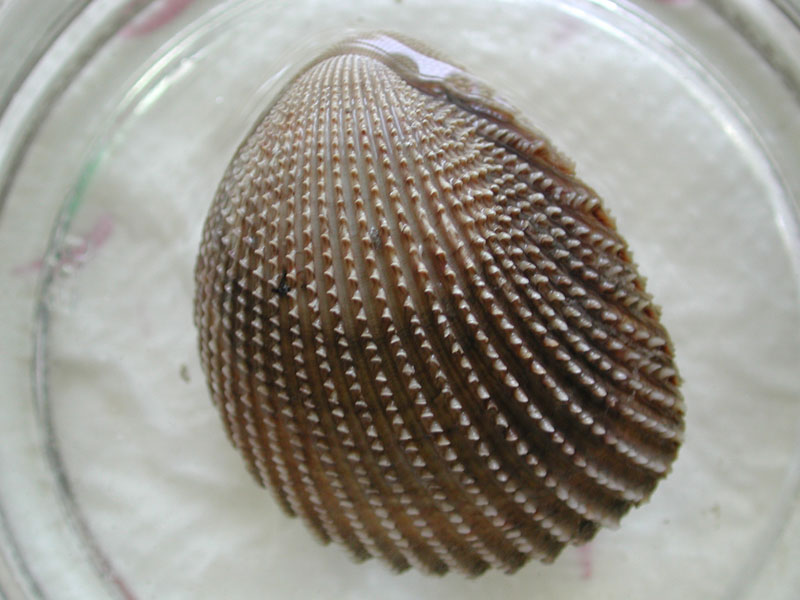
The hard clam occurs often in sand or mud, between high- and low-tide lines in shallow coastal waters. This clam is cosmopolitan in distribution, ranging from the Gulf of St. Lawrence in Canada to Florida and Texas, and supports important fisheries and aquaculture industries within its range. The broadly oval, moderately inflated clam has a thick-shelled, solid appearance with equal valves, or shells, and a heart-shaped appearance when viewed with the hinge up. The color is a dull grayish yellow, but can be brownish or black when freshly pulled from the bottom. A subspecies, know as notata, is characterized by reddish or chestnut-colored, chevron-shaped markings on the shell exterior. Many aquacultured clams feature these striated markings. The surface of the shells has many closely-set, erect concentric rings; stronger near the umbo (oldest part of the shell near the hinge) and smoother in the center. Internally the shell is white, sometimes with deep purple at the siphon end. The hard clam can reach up to 5 inches long and over 3 inches in width. The accepted common name is the northern quahog, but it is locally known as hard clam. The name "quahog" (pronounced co-hog) is derived from two Native American words meaning "closed" and "shell." Indians used the purple shell lining to make wampum beads, which were a trading currency in the colonial period. The genus and species names mercenaria (meaning "money" in Latin) refer to their former value. In addition to the regional names for this mollusk, there are different names for hard clams of different sizes. Littlenecks, a reference to the size of the siphons or “necks,” are the most valued aquaculture product size (approximately 1” across the hinge, or width).
What Can A Clam Farmer Do?
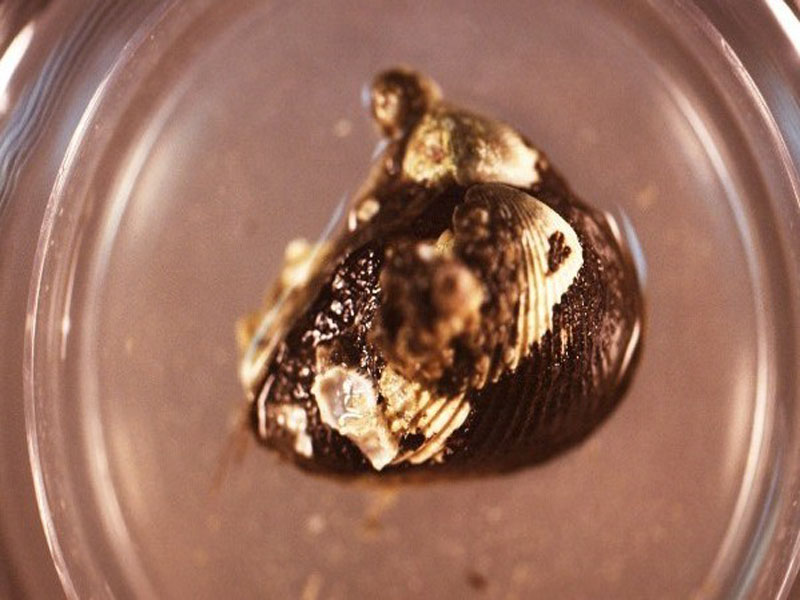
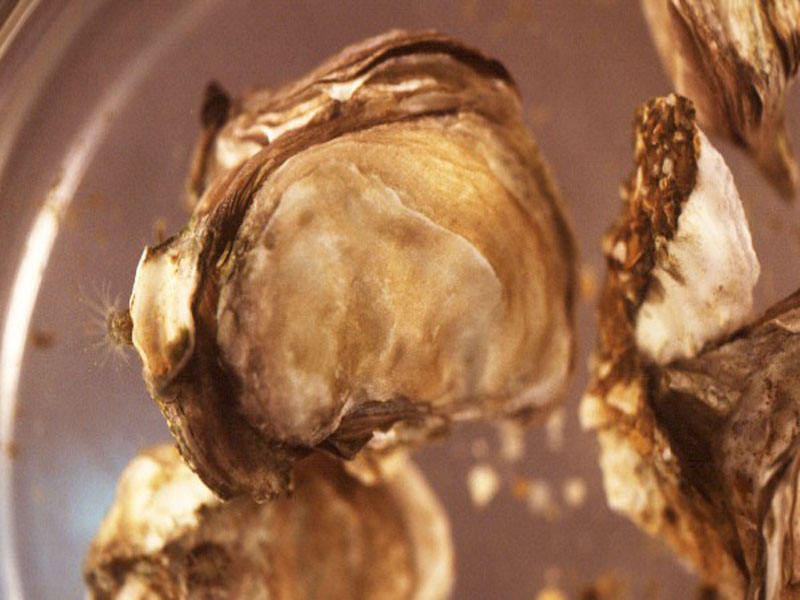
A clam farmer should first locate his or her growout site (shellfish aquaculture lease) in a suitable area that supports good growth and survival of this species, for example, relatively high salinities and a sand-mud mixture of bottom sediments. Next a clam farmer must not only invest money (“it takes money to make money”), but also his or her management time and skills for the business to be successful (Oesterling, 1995). A clam farmer should also have a basic understanding of the types and abundance of predator and fouling organisms found around the lease area. This information can assist a clam farmer in determining what predator exclusion techniques or planting strategies must be incorporated into the farming methods. Finally, record keeping is an important management tool which allows a clam farmer to evaluate the farm operation and to understand trends and patterns in clam production.