Description
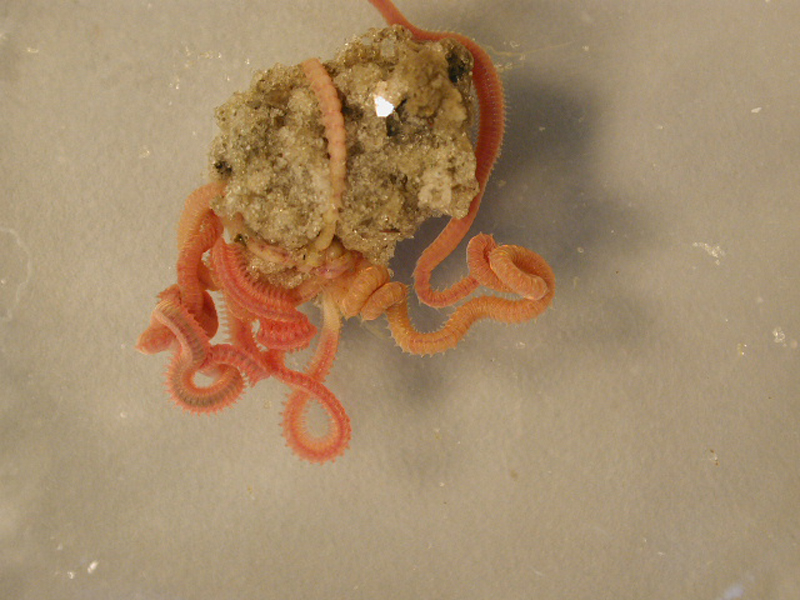
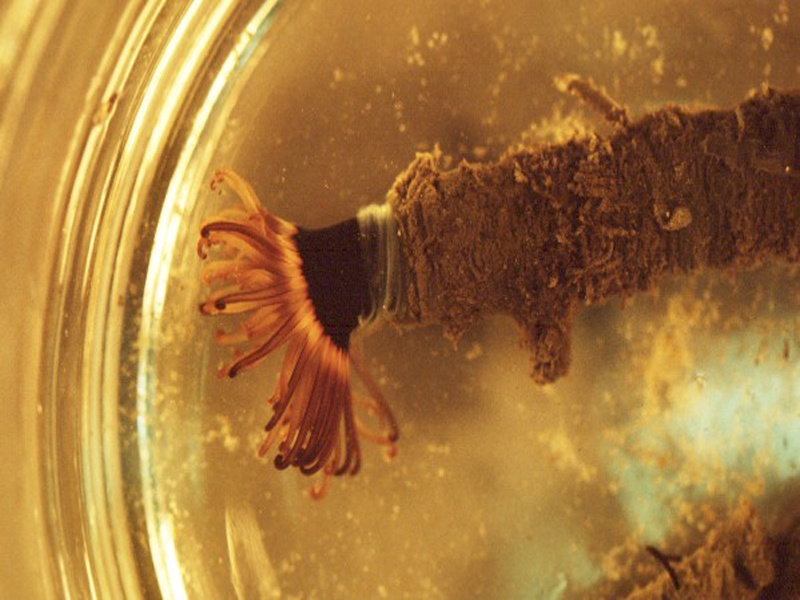
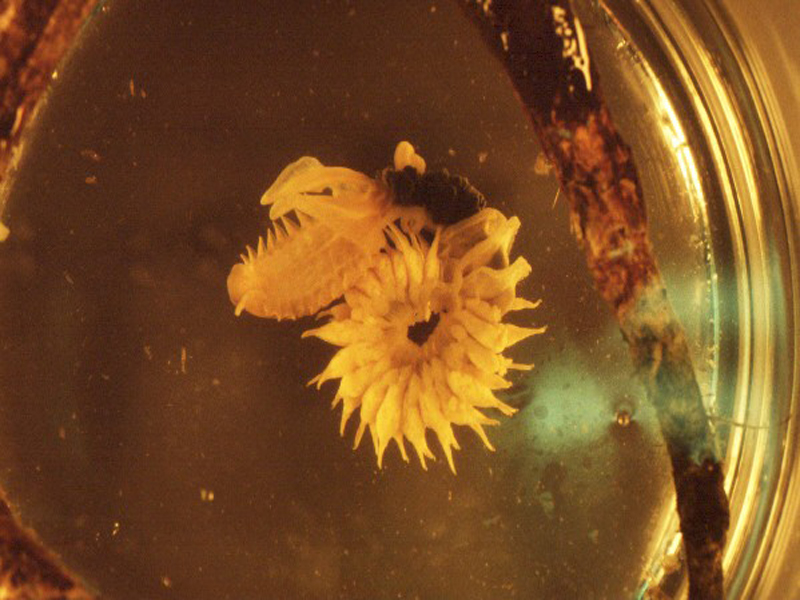
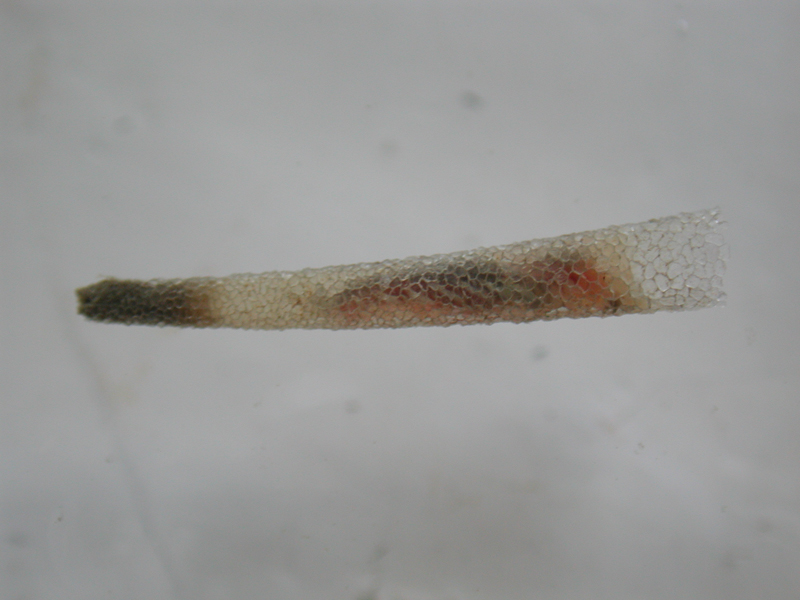
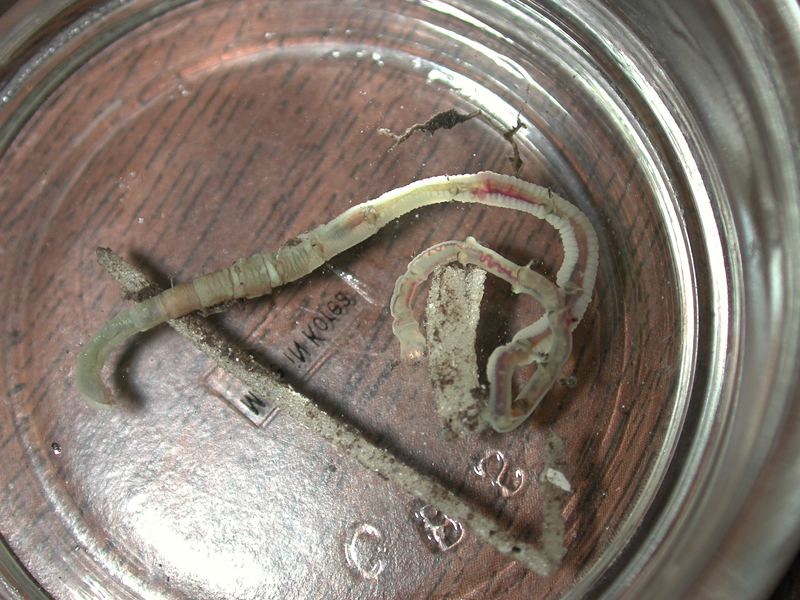
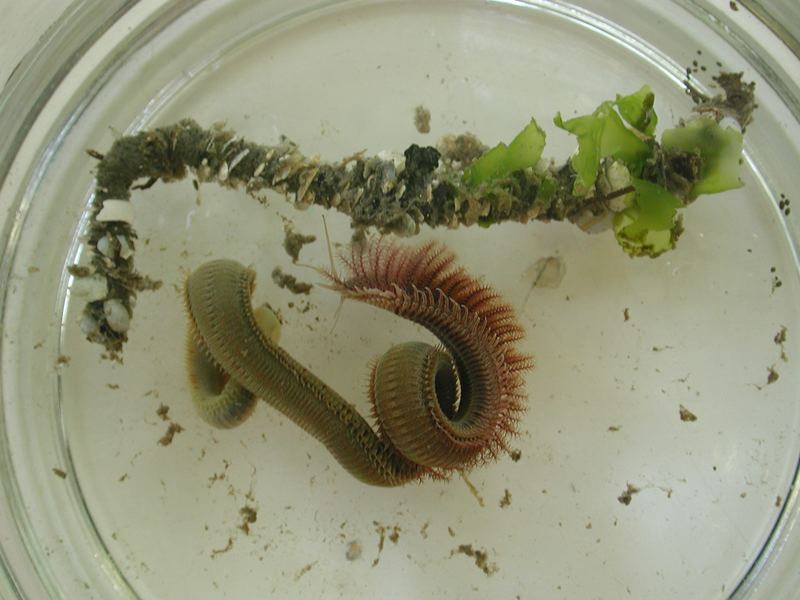
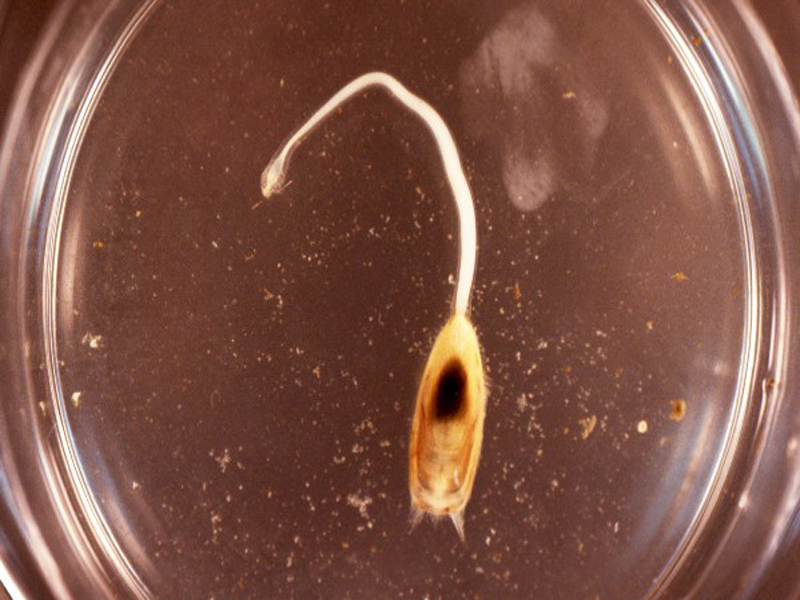
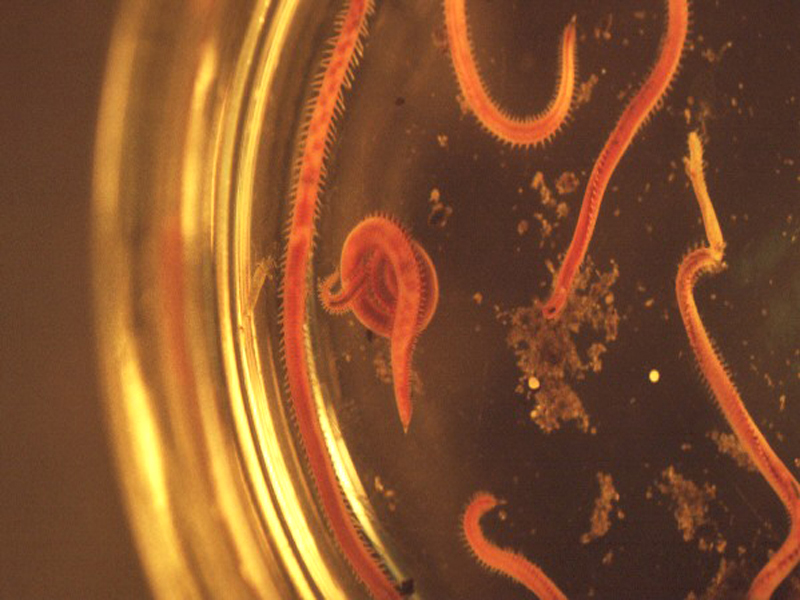
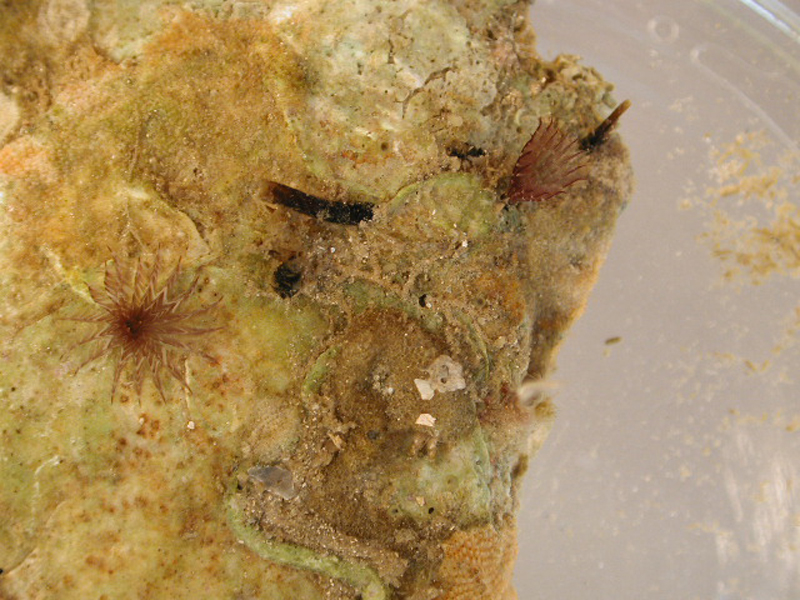
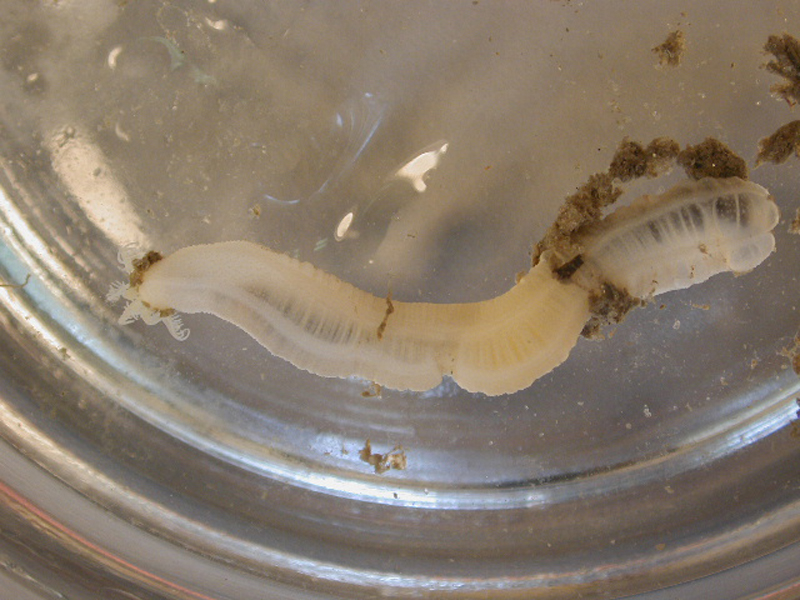
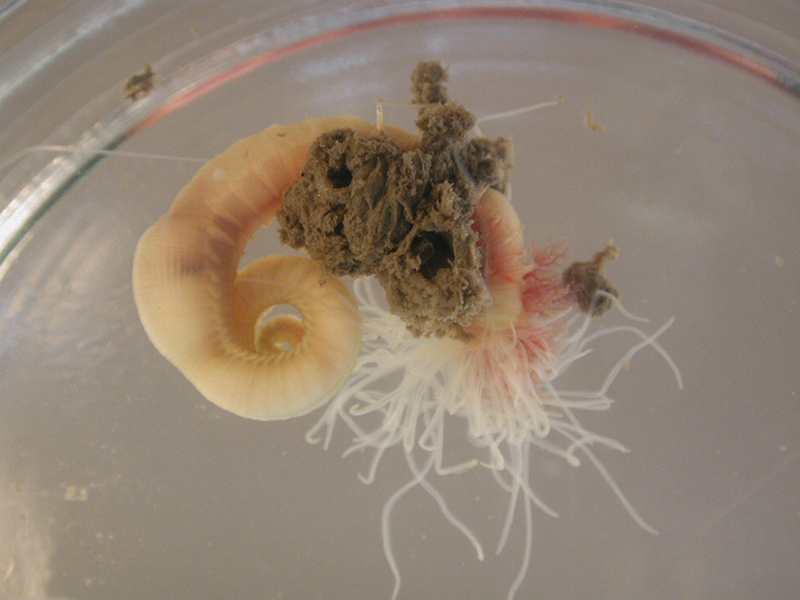
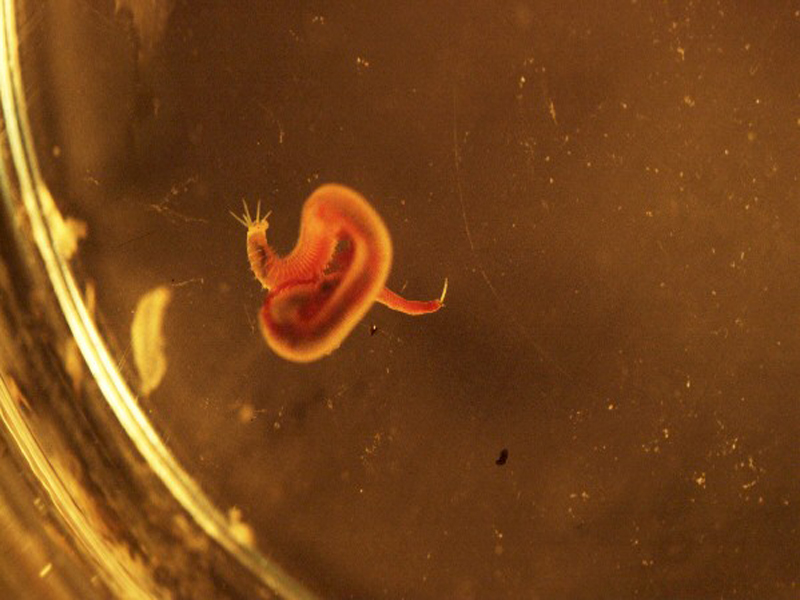
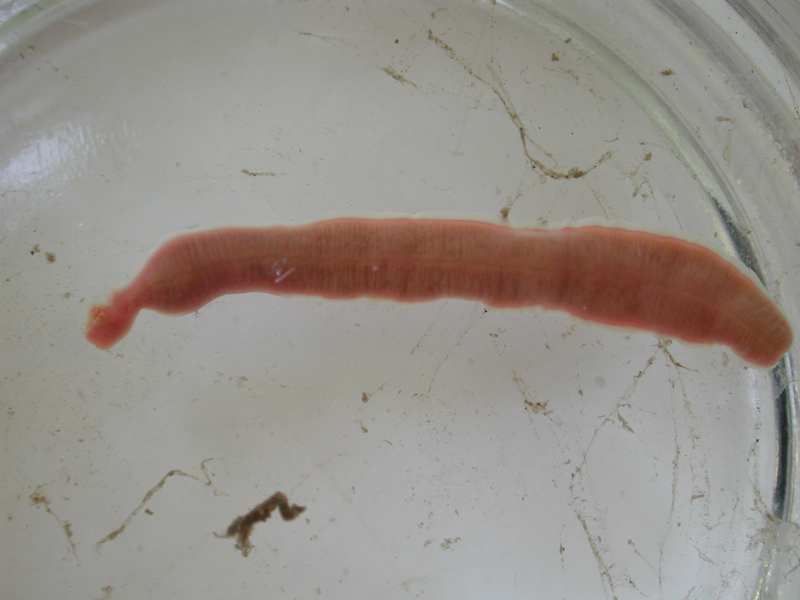
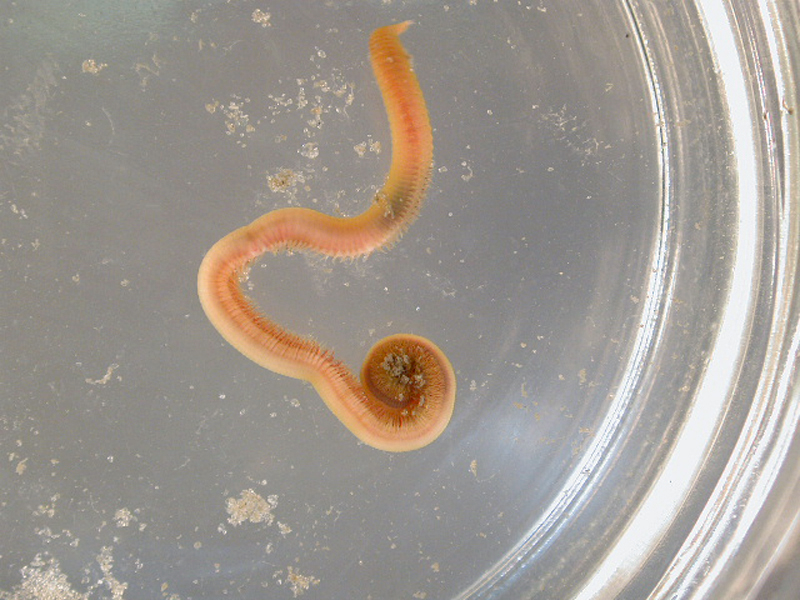
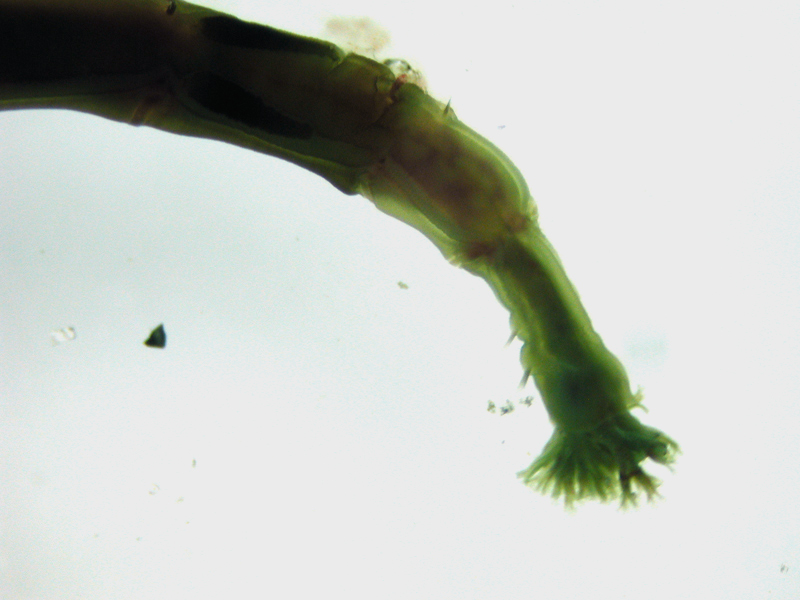
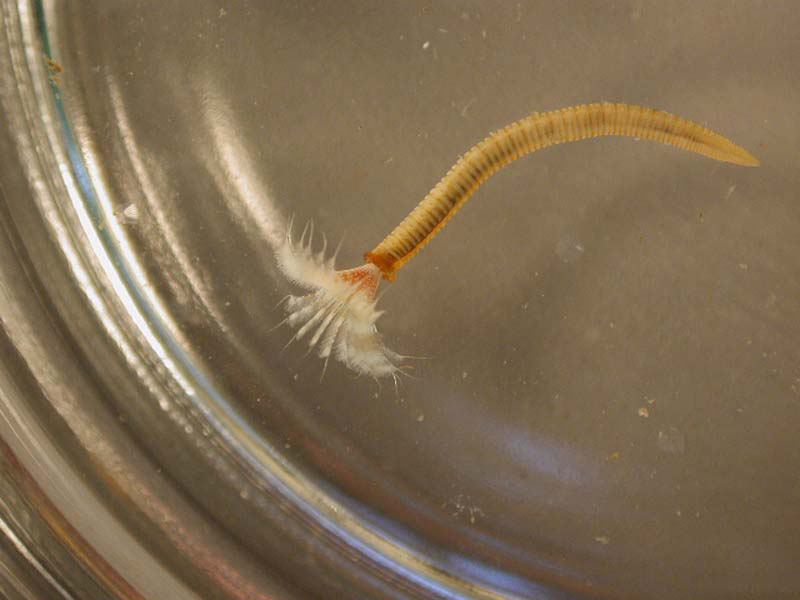
The plumed worm is a fairly large worm, up to 12 inches long, and is a common polychaete of Atlantic and Gulf of Mexico intertidal mud flats. Often, their presence is noted by the shaggy, debris-covered tubes projecting above the mud, extending up to 4 feet below. The tube is formed by a secretion of the worm, and it physical attaches shell fragments, algae, plant fibers and debris to the top of it, encouraging seaweeds and small creatures to colonize, upon which the worm feeds. The worm is a greenish color with 5 long tentacles at the head. It uses body undulations to pump water to its 30-40 pairs of bright red gill filaments on the upper half of the body. It is occasionally seen creeping out of its tube to search for food or tube-building material.
What Are The Effects On Clams?
Tube worms are not always a problem, but at some lease areas and in some years (usually when salinity levels are high), there are excessive outbreaks that can result in large losses of clams. Nursery bags are particularly vulnerable as tube worms can create thick encrusting mats, limiting water exchange through the small mesh openings and resulting in clam suffocation. The worms can also bind the top and bottom of a newly planted bag together, reducing the growing area for clam seed.
What Can A Clam Farmer Do?
During those times when tube worms are abundant, it is prudent for a clam farmer to take action. Placing large mesh, polyethylene cover netting over nursery bags may help. But it is critical that the farmer removes the netting, thus removing the tube worms, in a timely manner. A new layer of cover netting can then be replaced over the bags. While air exposure of 24-48 hours is effective in removing the worms, this treatment is not necessarily practical, and is certainly labor intensive as it requires a farmer to pull nursery bags out of the lease bottom. However, restocking clam seed into clean nursery bags and replanting may save the crop.