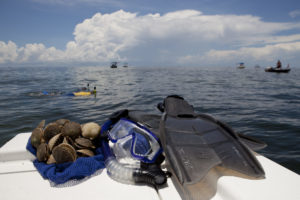
The Big Bend has a long history of natural resource dependence that dates to prehistory. Large Indian mounds scattered among the islands testify to the early inhabitants’ reliance upon shellfish for their sustenance. The waters surrounding the area’s coastal communities have historically been tied to their economic survival. Oysters, crabs, shrimp and fish have all crossed docks from Steinhatchee to Yankeetown at one time or another in abundance. But since 1995, when a statewide gill net ban was imposed, harvesting of mullet and other marine fish, as well as a “way of life,” came to an end. Today, shellfish aquaculture has replaced gill net fishing as the mainstay for many watermen. They still pursue mullet, especially during roe season, but now with a cast net to land this well-known southern delight. Far more common today are boats commonly called “bird dogs” converted to work the clam farms.
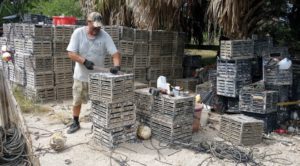 As you stroll the neighborhoods of these coastal towns, a common site will be stacked crab traps, wooden or plastic for stone crab and wire for blue crab. And you will occasionally discover clam bags laid across driveways. It is the easiest way to crush the fouling organisms that attach themselves over time to the bags. Although not harvested in the abundance of the past, the Big Bend remains a haven for fresh seafood. Succulent clams, freshly shucked oysters, soft shell crab or stone crab claws can be found on many menus and are fresh and delicious. With every bite, a taste of the sea and sense of history.